
Listen to how one person actually recommends a place to another and you will notice something odd. They almost never describe the thing they liked most. They describe the thing that is easiest to say. Those are not the same, and the gap between them decides how far a room's reputation travels.
A recommendation has to survive being retold
The food was excellent is not a recommendation. It is a rating, and the person hearing it already assumed as much, because nobody recommends a place where the food was bad. Ratings do not move anyone, because they carry no picture and nothing to repeat. What moves people is a detail concrete enough to be passed along intact, by someone who was not there, to someone who has never been. Think about how a referral actually travels. Your guest tells a friend. Some weeks later that friend is standing in a kitchen with a third person, trying to remember the name of somewhere good. What survives being handed on twice is never a grade. It is an image. There is a small test for whether a detail will survive it: could the person who heard it describe it accurately to a third person without having been there. Excellent service fails the test, because there is nothing to hold. They bring a cool scented towel at the end of the meal passes, because it is specific, physical and short. The listener can now picture an evening, and a picture is what gets written down in a notes app and found again three weeks later.
Give a guest something true and specific to say about you, and you have given them the sentence they will use when a friend asks where to go.
PALMA service notes
Why the specific beats the superior
This is uncomfortable for rooms that have spent heavily on the things that matter most. A kitchen can be genuinely better than its neighbours and still lose the recommendation to a room that is merely more describable. The reason is not injustice. It is that quality in cooking is hard to put into words that another person can act on, and a small physical gesture is easy. Most of a dining room's excellence is invisible to language: the sourcing, the timing, the thousand corrections nobody sees. Guests feel all of it and can articulate almost none of it. So they reach for what they can hold. This is also why the detail does not need to be expensive to do its work. It needs to be unusual enough to be worth mentioning, consistent enough that the friend who follows the recommendation finds it there too, and simple enough to survive being retold by someone who was not in the room. A plant in the window is not worth mentioning. A courtesy offered at a moment the guest did not expect it is. The disappointment of arriving and not finding the detail is worse than never having heard about it, which is the quiet argument for consistency over novelty.
- Specific enough to picture, so the listener sees an evening rather than a grade
- Short enough to say in one sentence, because that is all a recommendation gets
- Consistent, so the friend who comes on your word finds the same thing
- True, because a detail that oversells is the one guests mention when it disappoints
Where to find yours
Most rooms already have one and have never noticed it, because the people who work there stopped seeing it years ago. The way to find it is to stop guessing and start listening. Read your reviews for nouns rather than adjectives. Adjectives are ratings and tell you nothing. Nouns are details: the bread, the corner table, the thing they brought at the end. Those nouns are what your guests are already handing to their friends, and they are worth protecting. Ask departing guests what they will tell someone about tonight, rather than whether they enjoyed it, and listen for what they reach for first. If nothing comes back twice, you do not have one yet, and it is worth choosing one deliberately rather than waiting for one to emerge. The criteria are not complicated. It should sit at a moment the guest is paying attention, which usually means the beginning or the end rather than the middle. It should be physical, because physical things are easier to describe than impressions. It should cost the kitchen nothing in attention, because anything that competes with the food will eventually be dropped on a busy night. And it should be yours in a way that a neighbouring room cannot copy by Tuesday.
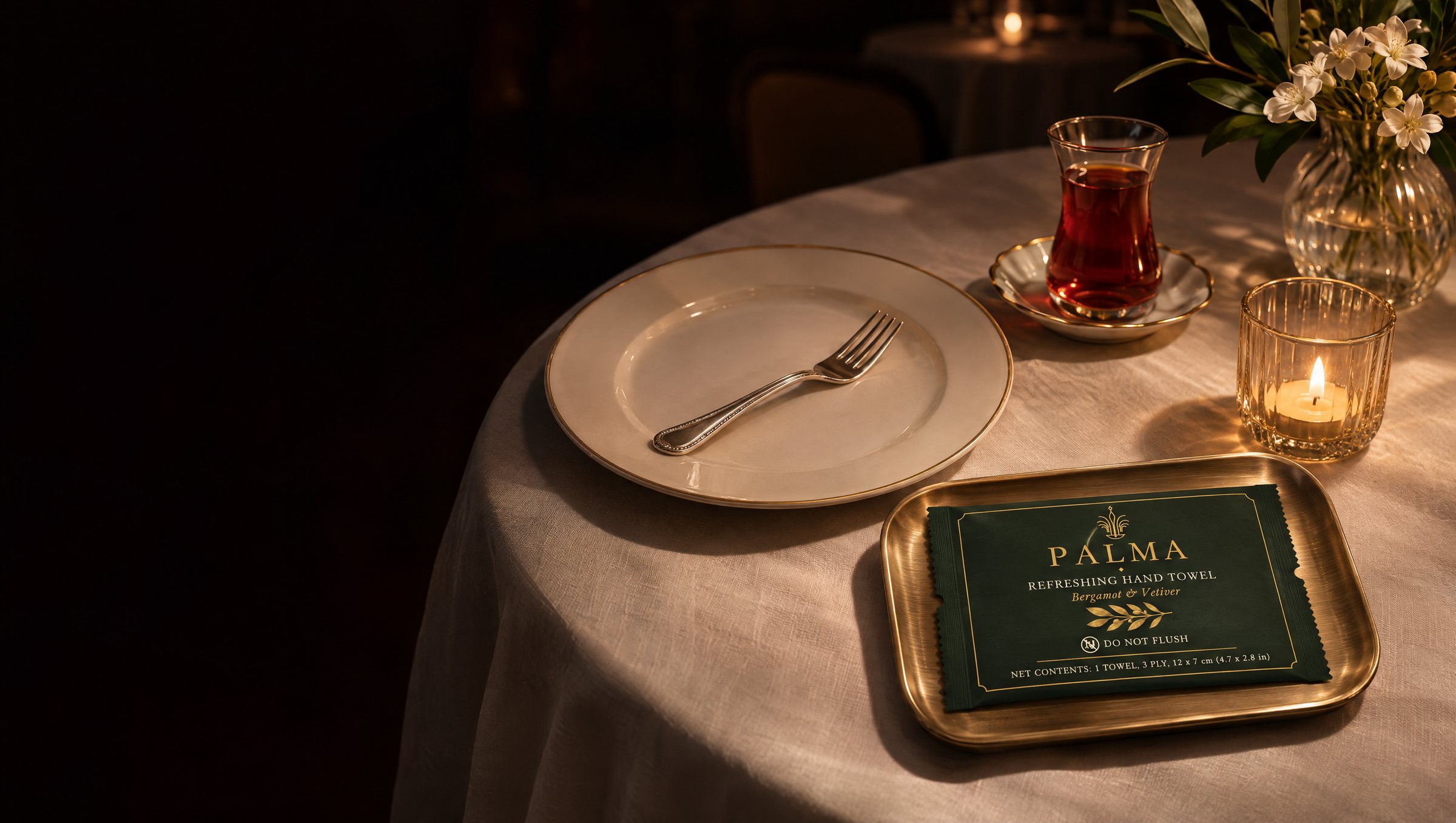
The end of a meal is unusually good ground for this. The guest is unhurried and attentive in a way they were not during the courses. The kitchen is finished, so nothing competes. And almost nobody else is doing anything there, which means a small gesture at that moment stands alone instead of joining a crowd of other impressions. A cool towel offered after the last plate, scented with something specific enough to have a name, gives the guest a sentence with a picture in it. That is what a recommendation is made of. Not a grade. A sentence a friend can repeat, three weeks later, in a kitchen, to someone who has never heard of you.