
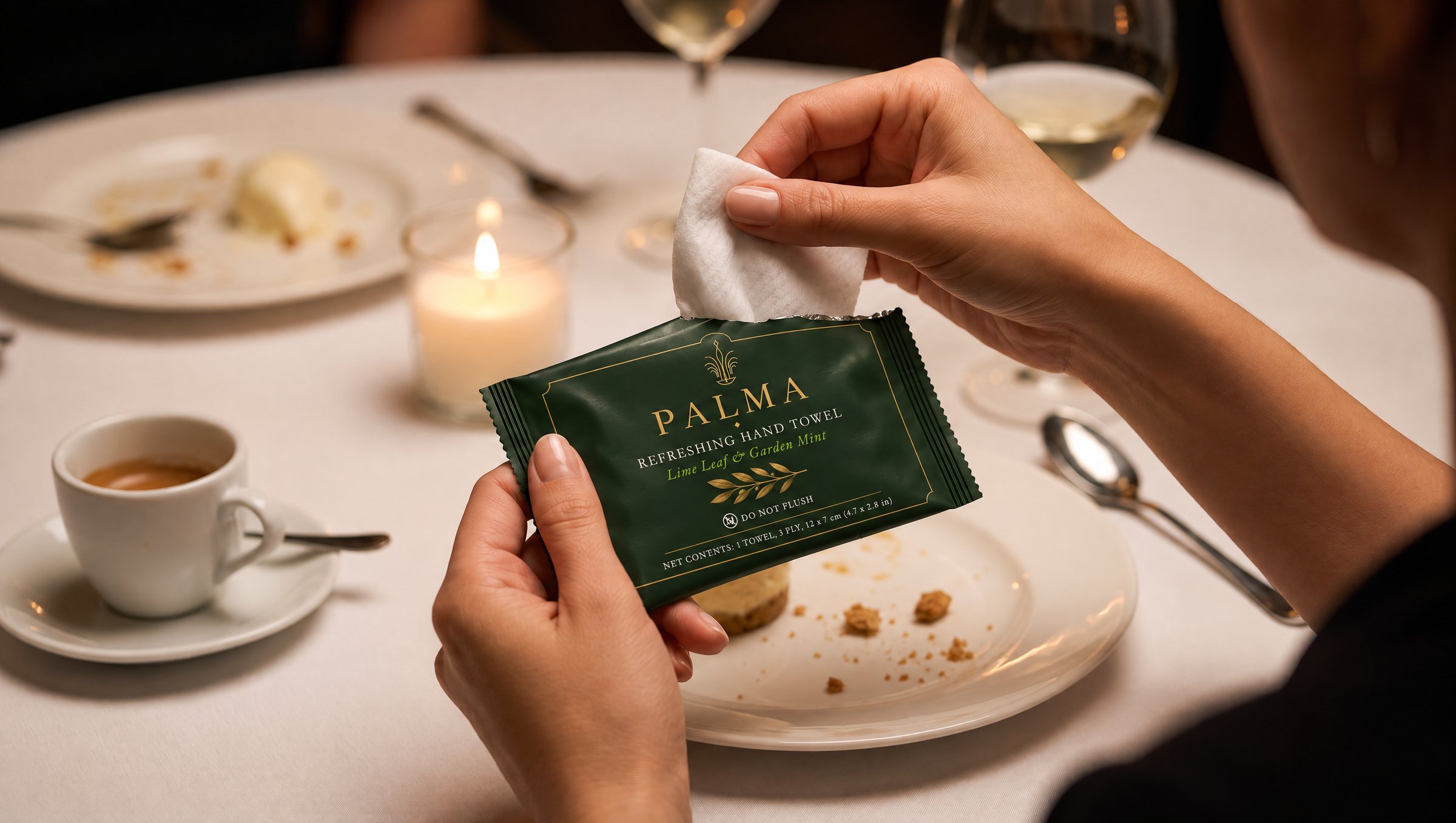
A new habit on a restaurant floor has about one week to become ordinary. After that it either runs without anyone thinking about it or it quietly stops, and the box sits in the stockroom while everyone agrees it was a nice idea. The difference is almost never enthusiasm. It is whether the team was told the one thing that makes a ritual repeatable: the exact moment it happens.
Why vagueness breaks it
Watch a briefing that does not work and you will hear a sentence like this: from tonight we are offering refreshing towels at the end of the meal, so remember to bring them out. Everyone nods. Nothing in that sentence tells a server what to do. End of the meal is not a moment, it is a twenty minute window with four or five candidate points inside it, and each server will pick a different one. One brings the towel with dessert, which competes with the plate. One brings it with the bill, which turns a courtesy into part of the transaction. One waits for a lull that never comes on a Saturday and the towels stay in the drawer. By Thursday the ritual has three versions and no version, and the manager concludes the team was not behind it. The team was perfectly behind it. They were never given a trigger. A service habit needs to attach itself to something that already happens on its own, every time, without anyone deciding. Clearing the last plate happens. The bill being requested happens. Coffee landing on the table happens. Those are triggers. The end of the meal is a mood.
A ritual is not a good intention. It is a trigger, a motion, and a sentence, and if any of the three is missing it will not survive a full Saturday.
PALMA service notes
The three things to decide before you speak
Settle these in the office, not in front of the team, because a briefing where the manager thinks out loud produces a floor that improvises. First, the trigger: name the single observable event that starts the ritual. Our suggestion for a dining room is the moment the last plate leaves the table, before coffee and before the bill is mentioned, because it sits in open space rather than competing with food or money. Second, the motion: who carries it, what it sits on, which hand, where it is placed. A sachet offered from a small tray reads differently from one set down beside a wine glass, and the difference is entirely in the presentation, not the product. Third, the sentence: one short line the server says. Not a script to perform, just a default so that nobody has to invent words while holding a tray. Something plain works best. A cool towel for your hands, with the compliments of the house. Eight words, no explanation, no sales pitch. Servers who are given a sentence stop hesitating, and hesitation is what guests read as awkwardness.
- The trigger: the last plate leaving the table, named out loud so every server starts at the same point
- The motion: tray or hand, which side of the guest, where the sachet is placed and what happens to it after
- The sentence: one short line, the same for everyone, so no one improvises mid service
- The fallback: what to do when the table is deep in conversation and the moment does not open
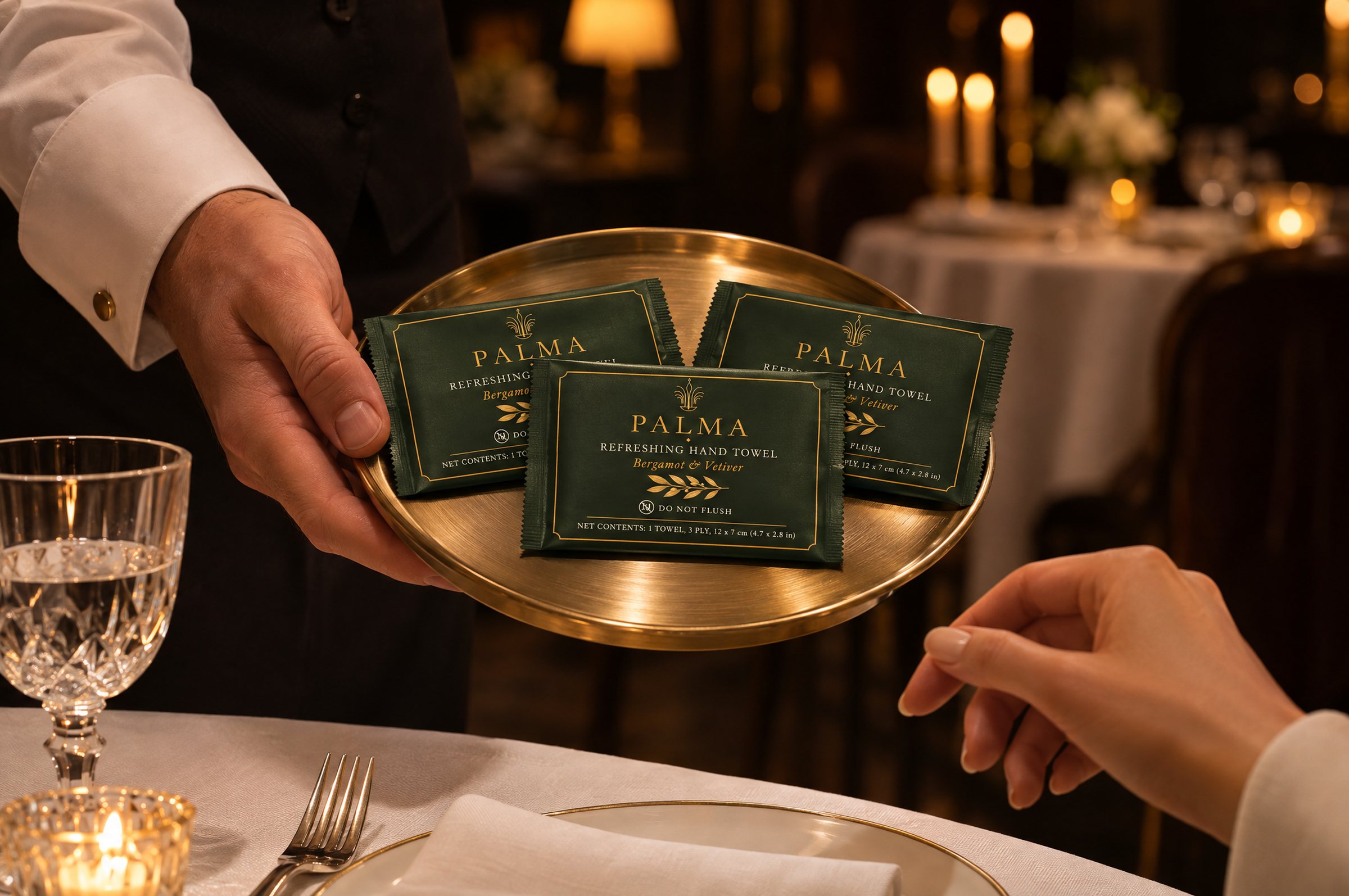
Run it as five minutes, not a meeting
The briefing itself should be short enough that nobody sits down. Open the sachet in front of the team so everyone has touched one before a guest does, and let them smell the scent you have chosen for the room, because a server who has never opened one will describe it badly when asked. Then say the trigger, demonstrate the motion once, say the sentence, and have two people repeat it back. That last step feels unnecessary and is the step that works. A sentence spoken aloud once by the person who will use it is remembered. A sentence heard is not. Name the fallback too. Some tables are mid argument, mid proposal, mid anything, and the right answer is to let the moment pass rather than force a courtesy into it. Servers who know they are allowed to skip it stop treating the ritual as a rule to be obeyed and start treating it as a judgement to be made, which is the posture you actually want from a floor.
Then watch it for four nights, not one. The first night everyone performs, because they are being observed and it is new. The third and fourth nights are where you learn whether the trigger holds under pressure, and pressure is the only honest test. If the ritual survives a full Saturday with one server down, it is now part of the service. If it collapses, the usual culprit is the trigger rather than the team. Move it earlier, attach it to something more reliable, and run it again. One more thing worth deciding before the first shift: who refills. A ritual that depends on a manager remembering to restock is a ritual with a countdown on it. Put the sachets where the side towels live, give one person the job of checking the level at the start of service, and the habit stops being fragile. The same logic applies to the scent. Choosing one for the room and keeping it consistent for a season is better than offering a choice at the table, because a guest asked to choose is being given a small task at the exact moment the house meant to give them a small gift.
What the first week should feel like
If it is working, the ritual becomes boring to the team by about day five, and that is the goal. Boring means automatic. Guests, meanwhile, will still be reacting to it, because for them it is the first time. That gap between a bored floor and a surprised guest is the signature of a habit that has landed. You will also start hearing it come back to you. A guest will mention it on the way out, or a booking will arrive referring to the place with the towels. That is the point at which a ritual stops being something you run and becomes something the room is known for. It takes a week of being specific, and the specificity is all in the trigger, the motion and the sentence.