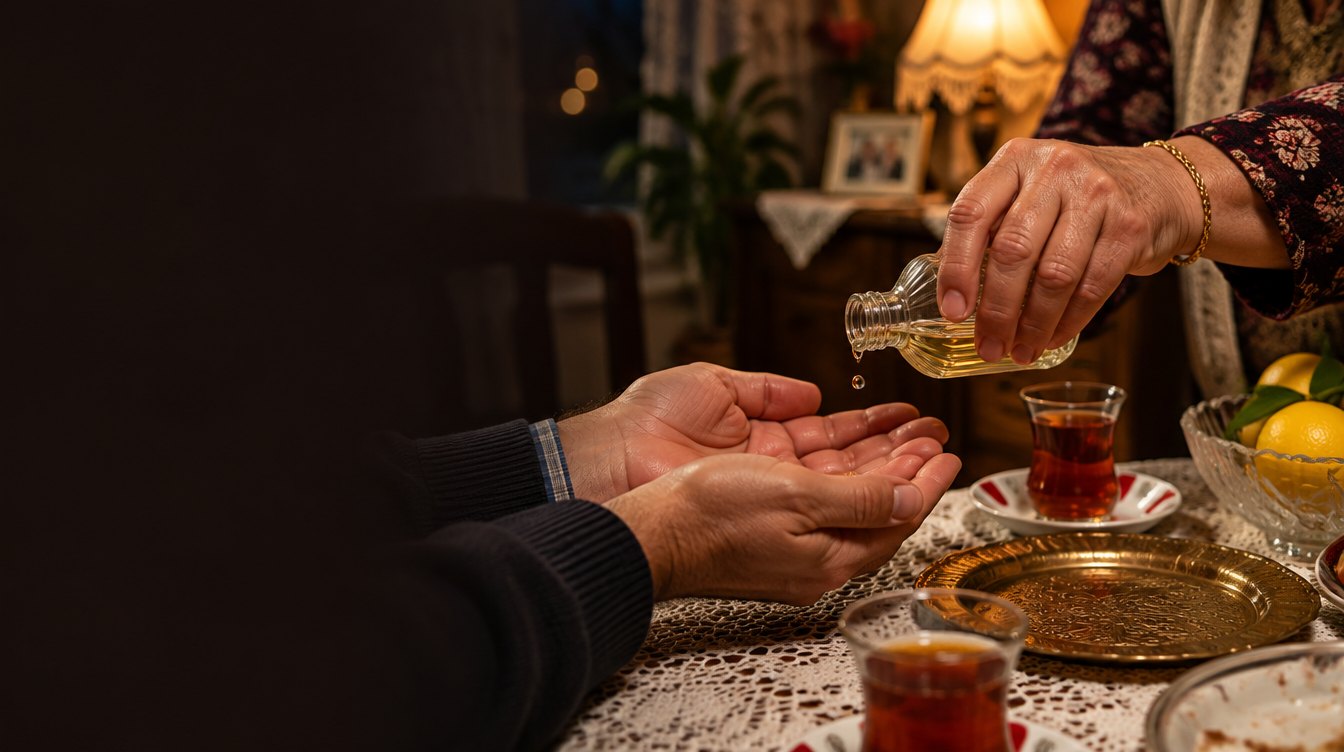
Visit a Turkish home and, sooner or later, someone will come toward you holding a bottle. The meal is over, the tea is on its way, and your host tips a little lemon cologne into your cupped hands. You rub your palms together, bring them to your face, and the room smells of citrus for a moment. Nobody explains it. Nobody needs to. That small gesture is called the kolonya welcome, and it is where PALMA comes from.
A bottle by the door
Kolonya is a light cologne, traditionally scented with lemon, that most Turkish households keep within reach of the front door. It took hold in the late Ottoman years and became a fixture of everyday life in the century that followed. Guests are offered it when they arrive. They are offered it again after the meal. Long distance coach attendants still walk the aisle with a bottle, and many restaurants bring it to the table with the bill. Lemon is the classic, but families have their favorites: rose, tobacco flower, fig, and fresh herbs all have their loyalists.
What matters is not the scent but the offer. Kolonya is never left on a shelf for the guest to find. A person brings it, holds it out, and waits. The gesture says: you are expected here, and we have thought about how you will feel when you leave.
The bottle is the least important part. The important part is that someone walks across the room to offer it.
The PALMA Standard
From bottle to towel
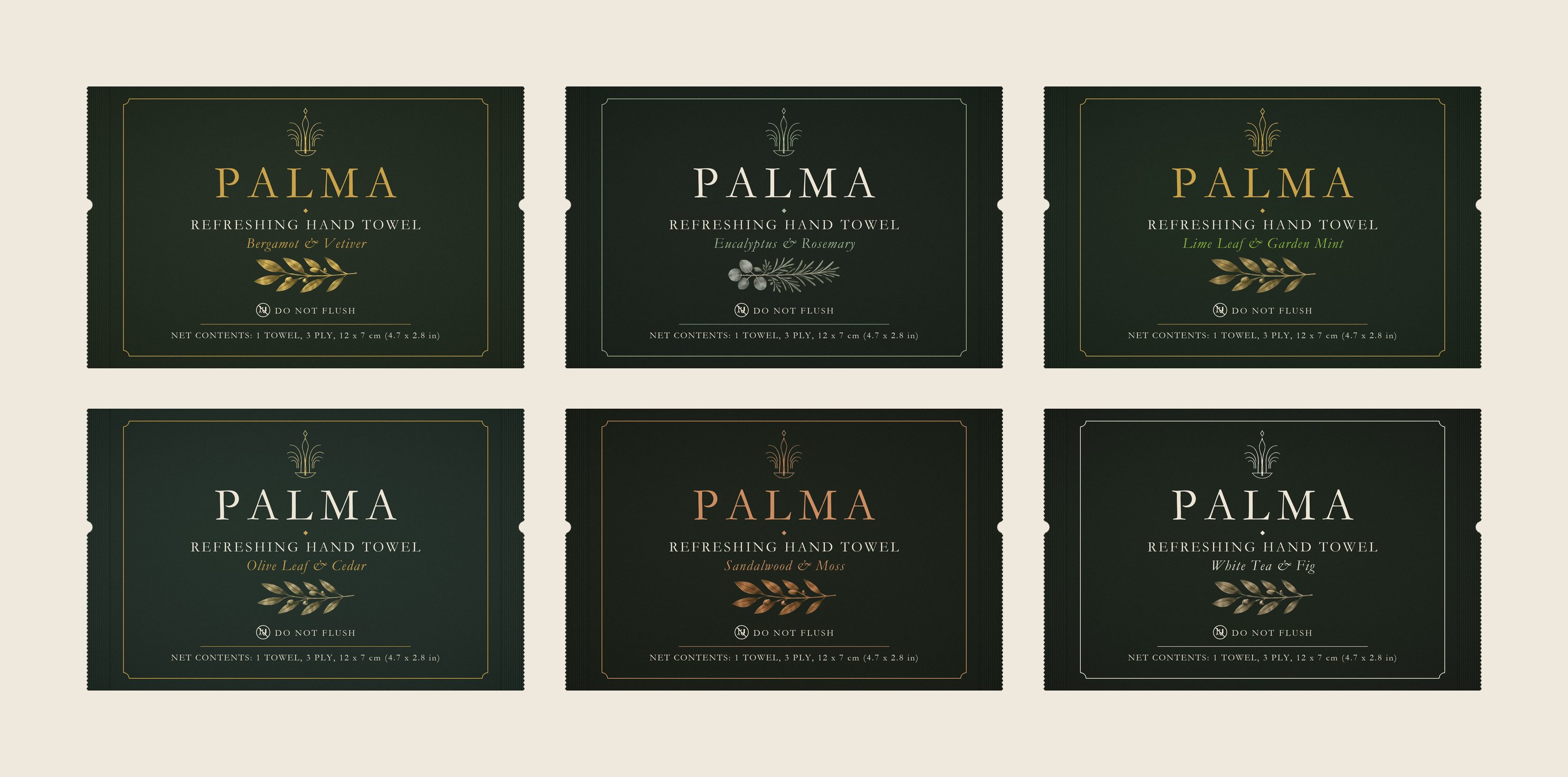
A bottle works beautifully in a living room. On a restaurant floor with two hundred covers, it is harder. Pouring takes two hands, the guest needs somewhere to put the fragrance, and the moment can feel like a performance when the table is busy. PALMA keeps the spirit of the kolonya welcome and changes the vessel. The fragrance lives in a soft 3 ply towel, sealed in its own foil sachet, so the guest can open it in one motion and take the moment at their own pace.
The towels are made in Türkiye. The formula keeps kolonya's light, alcohol based character and adds a touch of glycerin and one or two botanical extracts for each of the six scents. Lime Leaf & Garden Mint is the closest cousin to the lemon bottle by the door. Olive Leaf & Cedar and White Tea & Fig borrow from the gardens and markets of the Aegean coast.
What the ritual asks of a house
The kolonya welcome teaches three things that translate directly to an American dining room or hotel lobby.
- Offer it, never leave it. A towel left on the table is an amenity. A towel presented by a person is a welcome.
- Offer it at the same moment, every time. In a Turkish home the bottle appears after the meal, as reliably as the tea. Pick your moment and hold it.
- Keep the scent light. Kolonya is a breath of citrus, never a perfume. The guest should notice it, enjoy it, and forget it within a minute.
Why it belongs here
Mediterranean and Turkish restaurants in the United States already understand this gesture; many of their guests grew up with it. Steakhouses, seafood rooms, and barbecue joints understand it too, even if they have never heard the word kolonya, because their guests eat with their hands and leave the table wanting a fresh start. Hotels and spas understand it best of all. The welcome is the same in every one of these rooms: someone walks over, offers something small and fragrant, and the guest feels looked after.
That is the whole idea behind PALMA. Not a new invention, but a very old courtesy, carried from a bottle by a Turkish front door to the end of an American meal.