
A signature scent is the only design decision a guest carries home without knowing they are carrying it. Months later, a trace of cedar or lime leaf on the street can return them to your dining room more completely than any photograph. That power is why the choice deserves real method, and real restraint. What follows is a practical framework: how scent and memory work together, why quiet fragrance outperforms loud, how to match a fragrance to the personality of your room, and how to test the choice in live service before you commit.
Scent is a memory system
Of all the senses, smell has the most direct line to memory. The olfactory pathway connects to the parts of the brain that govern emotion and recollection without passing through the filters that edit what we see and hear. This is why a fragrance can return a whole evening in an instant: the light, the company, the mood of the table. Researchers in what the industry calls scent marketing have confirmed what innkeepers have known for centuries. Guests may forget the menu, but they remember how a place felt, and fragrance is the most efficient carrier of that feeling. It is also the hardest to imitate. A competitor can copy your chairs and your playlist within a season, but the scent a guest associates with your room is yours alone, compounding quietly with every visit. Choosing a signature scent is therefore not a decorating decision. It is deciding which memory your room will leave behind.
Why subtle beats loud
The most common error in hospitality fragrance is enthusiasm. A scent chosen in a quiet showroom is launched into a full room, and what felt elegant in still air becomes insistent across forty covers. Loud fragrance announces the brand and exhausts the guest; within an hour the nose stops registering it as pleasant and starts registering it as pressure. Subtle fragrance works differently. It supports the mood of the room without asking to be noticed, which means it never fatigues and never competes with the meal. This is also why the delivery medium matters. A towel carries fragrance in a brief, controlled dose at the moment it is opened, rather than diffusing it into the air all night. In a restaurant especially, the fragrance must know its place: after the food, beside the food, never above it. If a guest can name your scent unprompted on their first visit, it is probably too loud. If they simply feel the room is unusually composed, you have it right.
There is a commercial argument for restraint as well. A scent that overwhelms shortens visits: guests eat, feel vaguely hurried, and leave without dessert. A scent that settles into the background does the opposite, extending the comfortable middle of the evening in which second bottles and nightcaps are ordered. Subtlety is not the timid choice. It is the profitable one, and the one guests thank you for without ever knowing why.
The best fragrance in a room is the one nobody mentions and everybody misses when it is gone.
PALMA service notes
Match the fragrance to the room's personality
Every room already has a character: its light, its materials, its pace, the hour it comes alive. The signature scent should read as a distillation of that character, not a costume put on over it. A useful exercise is to describe your room in three adjectives before you smell anything: perhaps warm and dark and unhurried, or bright and coastal and quick. Then test each candidate against that description and discard anything that argues with it. Our own collection at PALMA was composed around exactly this logic, with each fragrance built for a particular register of room, and the six work well as reference points for the exercise:
- Lime Leaf & Garden Mint: bright lime leaf and garden mint over a clean botanical finish. For seafood restaurants, fine dining, and Mediterranean concepts that want lift without weight.
- Bergamot & Vetiver: citrus brightness grounded by elegant woods and earthy depth. For steakhouses, private clubs, and rooms with a richer, evening register.
- White Tea & Fig: soft tea notes and airy fig. A lighter hand for boutique hotels, daytime dining, and spaces that prefer calm polish.
- Sandalwood & Moss: warm woods and softened greenery over a grounded finish. For luxury hotels, members clubs, and elegant spaces that carry more atmosphere after dark.
- Eucalyptus & Rosemary: cool herbal freshness with a crisp, restorative edge. For spas, wellness-driven rooms, and fresh daytime service.
- Olive Leaf & Cedar: green Mediterranean depth over dry cedar warmth. For wine country hospitality, chef-driven concepts, and settings that favor earthy, grounded elegance.
Two cross-checks sharpen the shortlist. First, the menu: a fragrance should never echo or clash with what the kitchen is doing, so rooms built on delicate raw fish need a cleaner hand than rooms built on smoke and char. Second, the calendar: a scent that feels perfect in January can sit heavily in August, which is one reason some houses keep one signature for most of the year and a single seasonal alternate, changed once, deliberately, at a natural turning point.
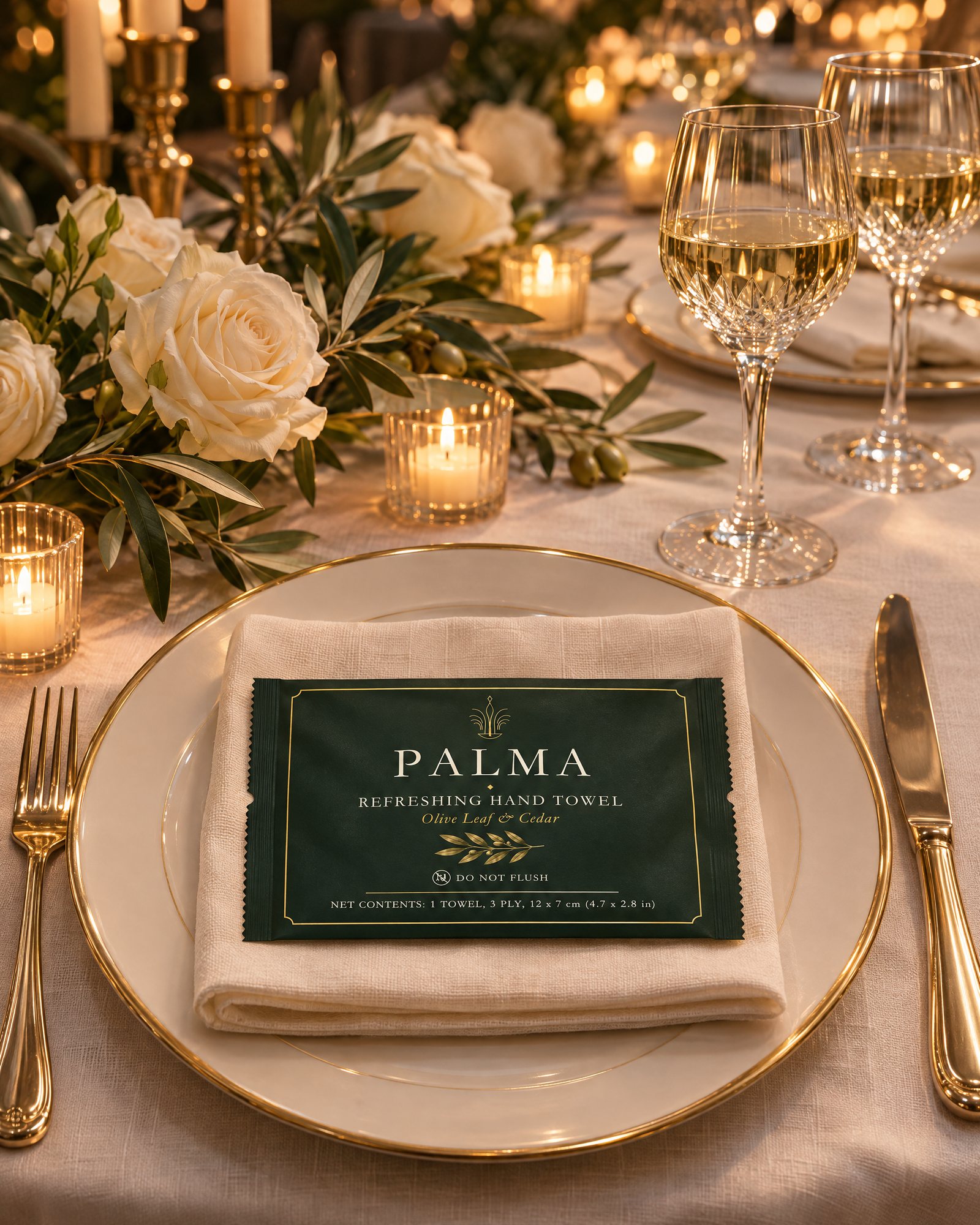
Test in real service, not in a showroom
No fragrance decision should be made in an empty room. Scent behaves differently across a full service: body heat and food aromas, the weather and the size of the crowd all change how a fragrance carries. Run your shortlist through real shifts, one fragrance per week, and watch rather than ask. Guests rarely have useful language for scent, but their behavior speaks: do they linger over the towel, does the table's pace soften, does anyone wrinkle their nose at the door. Include your team in the trial. Servers and housekeepers live inside the fragrance for eight hours at a stretch, and their fatigue with a loud scent is the earliest warning you will get. A structured evaluation kit, with samples and a simple worksheet, makes this easy to run honestly. Keep brief notes each night: the room's energy, the guest mix, anything unusual. Two or three weeks of real service will tell you more than an afternoon of smelling strips, and the fragrance that survives a rainy Tuesday and a fully booked Saturday is the one worth keeping.
Commit, and let consistency do the work
A signature becomes a signature only through repetition. Choose one fragrance and hold it for at least a season, ideally a year, before judging it. The memory effect that makes scent valuable is cumulative: the tenth visit anchors the association, not the first. Resist the temptation to rotate scents with the menu or the holiday calendar; variety belongs in the food and the light, while the fragrance does its quiet work underneath, constant as the room itself. If the season truly calls for adjustment, change once, deliberately, at a natural turning point, and tell your team why. The goal is that a returning guest should feel, before they can say why, that they have arrived somewhere familiar. That feeling is your signature scent doing exactly what it was chosen to do.