
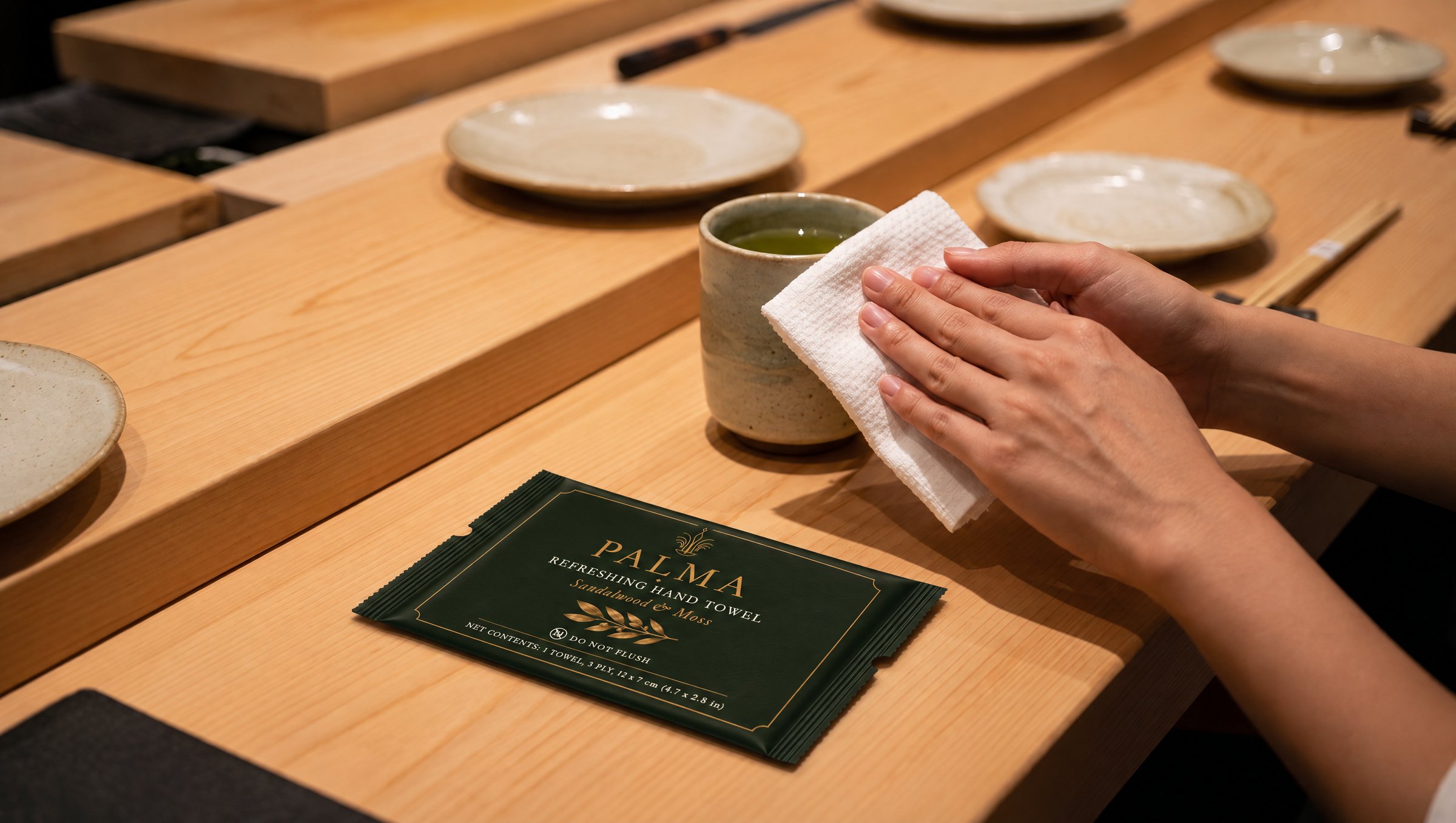
The strongest hospitality details are often the least performative and the most thoughtfully timed. In a dining room that practices quiet luxury, nothing strains to be noticed. The lighting does not ask for compliments. The linen does not announce its thread count. The service does not narrate itself. Everything is simply right at the moment it is needed, and the guest leaves feeling cared for rather than impressed. Quiet luxury is not minimalism, exactly. A quiet room can be warm, layered, even opulent. The quiet refers to the manner, not the amount. This playbook is about how that manner is built: not through grand gestures, but through a series of quiet decisions repeated until they become the character of the room.
Three principles of quiet luxury
The first principle is timing over display. A gesture offered at the wrong moment is theatre. The same gesture offered at the right moment is care, and the difference lies entirely in the judgment behind it. Consider the refreshing towel. Brought mid-meal without reason, it interrupts. Offered as the last plate clears, when hands are ready and the table exhales, it feels inevitable, as though the evening had been composed around this small comfort. This is why the best rooms rehearse when, not what. Water is poured before it is asked for. The bill arrives only when eyes begin to wander. None of this requires new equipment or a larger budget. It requires attention, which is rarer than either. The fine dining guest experience is built from dozens of these decisions, each one invisible when correct and glaring when forced. The guests who read timing most acutely are the ones who dine out often, because they have learned to read a room the way a good room reads them. A room can purchase beautiful objects in an afternoon. Timing takes a season of watching tables rather than clocks, and it is the first thing a practiced guest feels. Display asks to be seen. Timing asks only to be felt.
The second principle is materials over messaging. A brand that must explain its refinement has already lost the argument, because explanation is the least persuasive language in a luxury room. Weight persuades. Texture persuades. The cool density of a well-made towel, the paper stock of a menu, the balance of a water glass: these things make the case silently and completely. One perfect material outperforms ten adequate ones, and suppliers deserve the same scrutiny a chef gives to fish. A towel with real heft in the hand says more about a room's standards than a paragraph of menu copy ever could. There is a financial argument here as well: a room that buys well buys once, and good objects age into the character of a place rather than out of it. When a guest cannot say why a room feels expensive, materials are usually the answer. As luxury hospitality trends continue to move away from spectacle and toward substance, materials have become the truest vocabulary a room possesses. Choose fewer of them, choose them well, and let them speak without translation.
The third principle is consistency over spectacle. Spectacle is expensive and exhausting, and it is impossible to repeat on a wet Tuesday in February. Consistency is quiet, and it compounds. A guest who receives the same composed gesture on an ordinary weeknight as on a celebrated Saturday learns to trust the room, and trust is the real currency of a quiet luxury restaurant. This is why the standard should be written down rather than carried in the memory of one gifted server. Systems, not heroics, are what survive staff changes, busy seasons, and tired evenings. The honest test is the weeknight test: what does the room do when the booking sheet is thin and no one important appears to be watching? Consistency is not the enemy of magic. It is the condition that makes magic believable. Anyone can rise to an occasion. The rooms guests return to, and recommend in lowered voices, are the ones that never needed the occasion in the first place.
Luxury is not the presence of impressive things. It is the absence of anything that has not been considered.
From the PALMA studio notebook
The playbook: eight practices
- Choose one closing gesture for the meal and deliver it at the same moment, every service, without variation
- Chill towels to a consistent temperature and present them without commentary, letting the gesture carry itself
- Select a single signature fragrance for the room and hold it for at least a season before judging it
- Remove from the table any object that exists only to be noticed. The room already has a voice
- Train the team to describe details briefly or not at all. Explanation is a form of apology
- Buy fewer, better materials and let weight and texture do the persuading
- Rehearse the transitions, especially the final ten minutes, where most rooms lose their composure
- Measure success by what guests feel at the door, not by what they photograph at the table
Finally, audit your own room the way a guest would. Book a table at the slowest hour, bring a skeptical friend, and sit through a full service without your operator's eyes. Owners are famously blind to their own rooms. Note every object and gesture that asks for attention, and ask of each one a simple question: would it be missed if it disappeared? Whatever answers no is decoration, and decoration is negotiable. Then watch the close of the meal with particular care, because that is where quiet luxury is most often won or lost. Pay attention to your own mood as the evening ends, because irritation at small frictions is data. If the ending arrives composed and unhurried, and warm, the room is doing its work. If it arrives as administration, no amount of earlier brilliance will fully recover the evening. Ask the team, privately, what they find themselves apologizing for; their answers are a map of the room's quiet failures. The towel, the bill folder, the farewell at the door: these are the final three impressions of the evening, and they deserve the same rehearsal as the first course. Write the findings down, fix one thing per week, and repeat the audit each season, because standards drift the moment they are assumed. It is worth inviting one trusted regular to perform the same exercise and comparing notes afterward; loyal guests see a room more clearly than its owners do, and they are usually generous with the truth. This is the standard we hold the refreshing towel to, and it is the standard the modern dining room deserves.