
The most persuasive sense in hospitality is the one guests notice least. Sight and sound are evaluated consciously, approved or questioned in real time. Smell goes straight to memory, uninvited and unedited. That is why the fragrance of a room can outlive every other detail of an evening, and why it must be composed with unusual restraint, the kind of restraint that treats the guest's attention as something borrowed, never taken.
The oldest memory we have
Of all the senses, smell has the most direct wiring to the parts of the brain that govern emotion and memory. Signals from the olfactory bulb reach the amygdala and the hippocampus without the usual relay through the thalamus, which means a scent is felt and filed before it is ever examined. Everyone knows the experience: a trace of something in the air, and an entire afternoon from twenty years ago returns, intact, with its weather and its company. Proust built a novel around a madeleine, but the phenomenon needs no literature to prove it. Scent memories are among the oldest, the most emotional, and the most durable we keep. Visual memories fade into summaries; scent memories tend to return whole. The great hotel groups understood this long ago, which is why a particular lobby can follow a guest for years, and why that guest will eventually buy the candle, trying to take the feeling home. Airlines learned the same lesson with the refreshing towel: a small scented gesture at altitude, repeated for decades, because it anchors the cabin in memory better than any advertisement. For a hospitality room, this is both an opportunity and a risk. A fragrance encountered once, at one dinner, can carry that evening for decades, returning unbidden at the most ordinary moments: a lobby, a taxi, a stranger's scarf on a train. The same directness that makes scent so memorable also makes it impossible to argue with. A guest who finds a fragrance too loud cannot be talked out of the impression.
A fragrance the guest barely notices can become the detail they remember longest. That is the paradox every scented room must respect.
PALMA fragrance notes
Below the threshold of attention
The best hospitality fragrance works below the threshold of attention. It is present in the way good lighting is present: shaping the mood of the room without becoming the subject of it. Guests register such a fragrance the way they register fresh air in a well kept room, as a general sense that things are right, noticed fully only in its absence. A loud scent inverts that relationship. The moment guests comment on the smell, the smell has become the event, and the evening has been quietly demoted to backdrop. Loudness carries a second cost at the table. The meal already has a fragrance program, written by the kitchen, and any ambient scent strong enough to compete with it is strong enough to distort it. There is a third cost, too, and it is human: tolerance for scent varies enormously from guest to guest, and a level one table finds pleasant, another finds intrusive. Quiet fragrance offends almost no one; loud fragrance divides the room. Restraint, by contrast, reads as luxury for a reason. Calm rooms signal confidence. A house that understates its fragrance is telling the guest that nothing here needs to shout, that the evening can be trusted to speak for itself. It also signals respect for the guest's own senses, an acknowledgment that the room is a host, not a performer, and that hospitality is something offered rather than something impressed upon people. Subtlety is not the absence of design. It is design with the discipline to stay out of the way, felt in the shoulders and the breathing long before it is named.
- Present at arm's length, never across the room
- Clean and botanical in character, never sweet enough to fight the menu
- Consistent from first service to last, so memory has something stable to attach to
- Quiet enough that guests feel it before they can name it
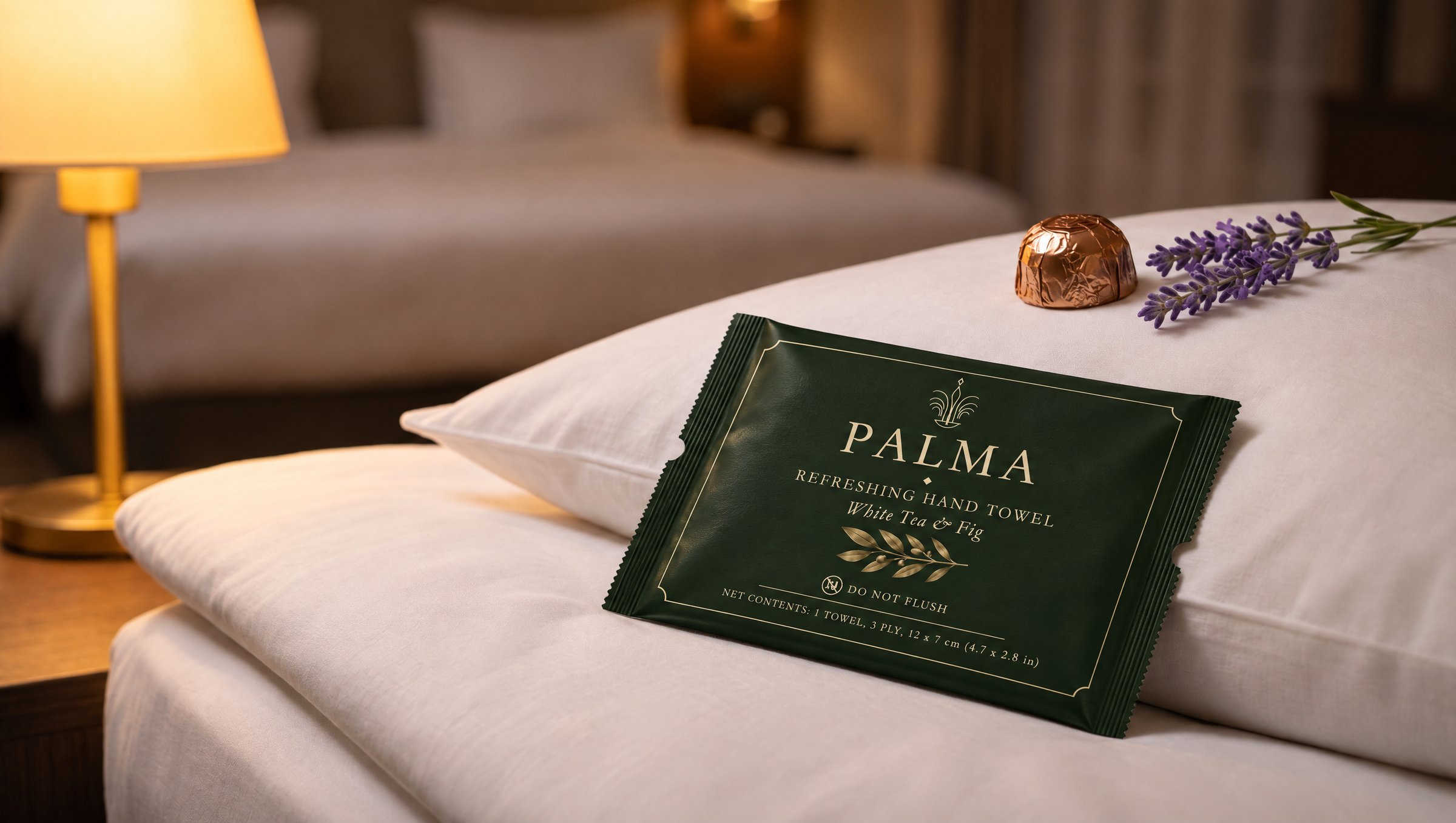
Subtle does not mean interchangeable. A quiet fragrance still has a register, and the register should match the energy of the room it serves. A bright seafood dining room at lunch asks for something that reads as clean air: Lime Leaf & Garden Mint, built on lime leaf and garden mint, refreshes without ever leaning on the menu. A steakhouse or private club after dark carries a richer register, and Bergamot & Vetiver meets it with dry citrus grounded in vetiver and cedarwood. Boutique hotels and calm daytime rooms tend to suit White Tea & Fig, soft tea notes and airy fig that polish rather than perform, while rooms that gather atmosphere late into the evening often belong with Sandalwood & Moss, warm woods over a grounded, mossy finish. Matching is a discipline rather than a mood: it weighs the room's energy, the hour of service, and the season, and it rewards patience, because a fragrance deserves to be tried across a full week of services before it earns the title of signature. The refreshing towel is, in this sense, an ideal instrument: it delivers fragrance at arm's length, for a few seconds of close contact, and then it is gone, a dose measured precisely enough that even a signature scent never has time to become loud. The goal is not variety for its own sake. It is fit, and then fidelity. A signature scent is less a choice than a commitment, renewed quietly at every service until guests can no longer separate the fragrance from the feeling of the room itself. One signature, held constant, so that years later a trace of it in the world returns the guest to your table. Loud scents are remembered as an intrusion, a thing the room did to its guests. Subtle ones are remembered as the evening itself.