Every detail in a well-composed property speaks the same language. The joinery, the lighting temperature, the weight of the door handle, the tone the host uses at the threshold. Then the guest opens a drawer, or reaches the end of a meal, and meets an amenity that could belong to any property, in any city, at any price point. The sentence breaks. Hotel amenities design fails most often not through bad taste but through discontinuity, and the fix is rarely a more expensive object. It is alignment. When the packaging, the fragrance, the material and the service language agree with one another, the amenity stops feeling generic and starts feeling inevitable, as if the brand had always owned this gesture and simply waited for the right moment to offer it. This essay is about closing that gap, about treating the amenity as a brand extension with the same discipline as the architecture.
Four decisions that read as one
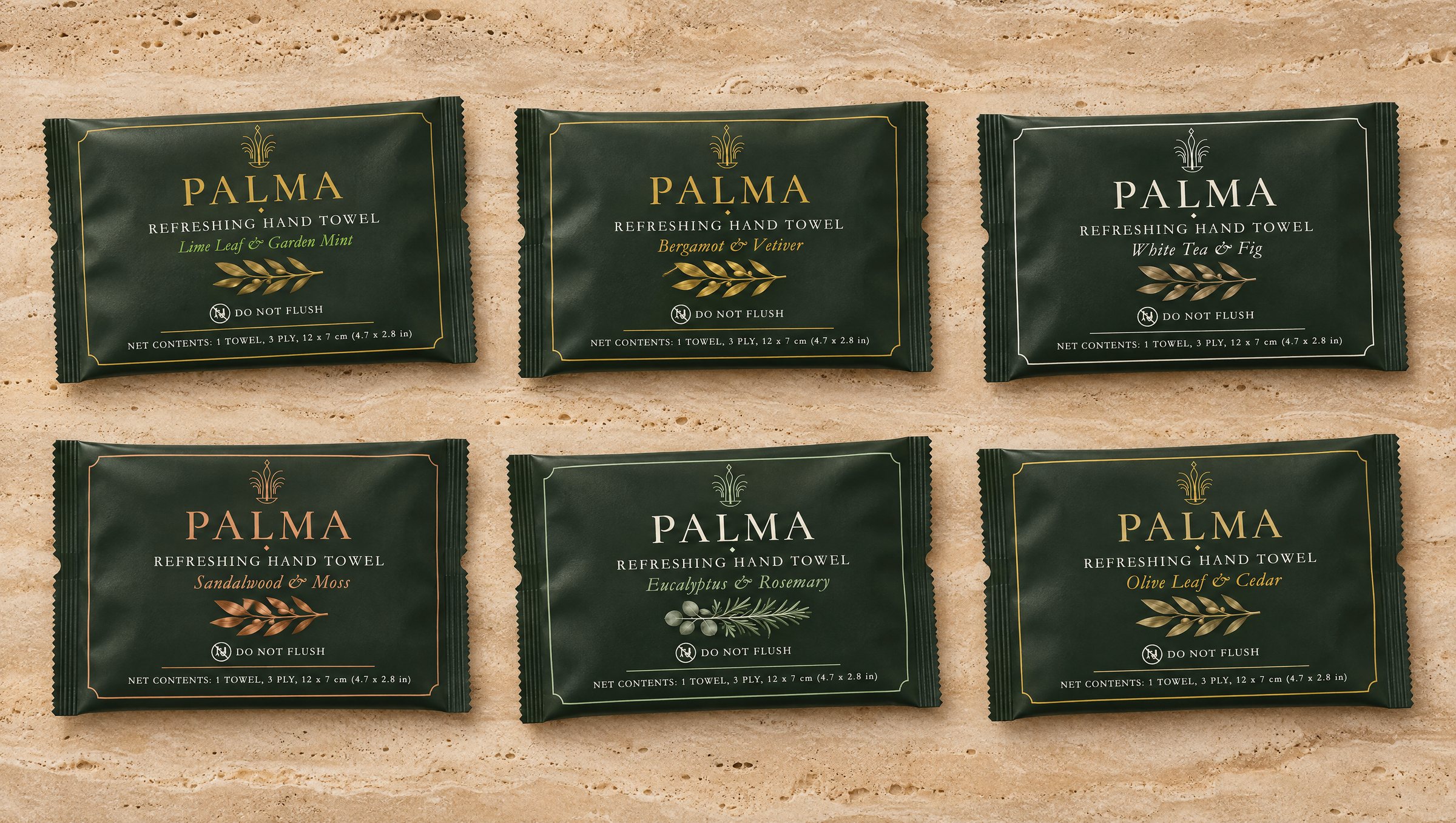
An amenity feels native to a brand when four decisions are made as one decision. The first is the object itself: what it is, what it does for the guest, and why it appears at that particular moment in the visit rather than any other. A towel at arrival answers fatigue. A towel at turndown answers the wish to be looked after. The object earns its place by knowing which question it answers. The second is scent. Fragrance is the fastest route to memory and the easiest element to get wrong. It should support the mood of the room, never announce itself over a meal or a treatment, and it should be composed with the same care a sommelier brings to a pairing. The third is material: the weight of a wrapper in the hand, the softness of the towel, the way a packet opens cleanly or does not. Guests handle amenities before they evaluate them, and the hand is an honest critic. Weight and texture are read, temperature too, in a fraction of a second, long before any label is. The fourth is script, the service language that surrounds the object. A towel presented with a quiet, practiced sentence reads as ritual. The same towel set down without a word reads as stock. When these four agree, branded guest amenities stop reading as merchandise and begin reading as hospitality. That is the difference between an object guests notice and a gesture guests remember. None of this requires extravagance. It requires that the people choosing the object, the scent, the material, and the script answer to a single standard, and that the standard comes from the brand rather than the supplier.
A guest should feel your brand in the final five minutes of service, not read it off a wrapper.
PALMA Private Label Studio
Generic amenities read as afterthoughts because, most of the time, they are afterthoughts. The fit-out consumes the design budget, the opening date approaches, and the amenity is procured from a catalogue by whoever holds the purchasing login. Nothing is wrong with the object; everything is wrong with its context. A sharp synthetic fragrance in a spa built around quiet. A glossy packet in a dining room of handmade tile and unlacquered brass. The guest cannot name the problem, but the guest can feel the seam, and the seam is where trust quietly leaks away. A useful test: cover the logo and ask whether the amenity could still only belong to this property. If the answer is no, the object is decoration, not identity. The alternative exists on a spectrum, and it is wider than most operators assume. Private label hospitality amenities range from a disciplined curation of an existing house collection all the way to full co-branding, and the right point on that spectrum depends on how much of the brand's identity the amenity is asked to carry, how quickly it must launch, and how deeply the property wants the gesture to be its own. What matters is that the choice is made deliberately, early, and by someone accountable for how the property feels, not only for what it costs.
- House selection: a house fragrance and packaging system chosen because it already suits the room, the lightest touch and the fastest to launch
- Directed selection: fragrance direction and accent colour adjusted within a proven packaging system, a signature without a ground-up design
- Custom packaging treatment: foil and typography composed around the property's identity while the object beneath stays proven in service
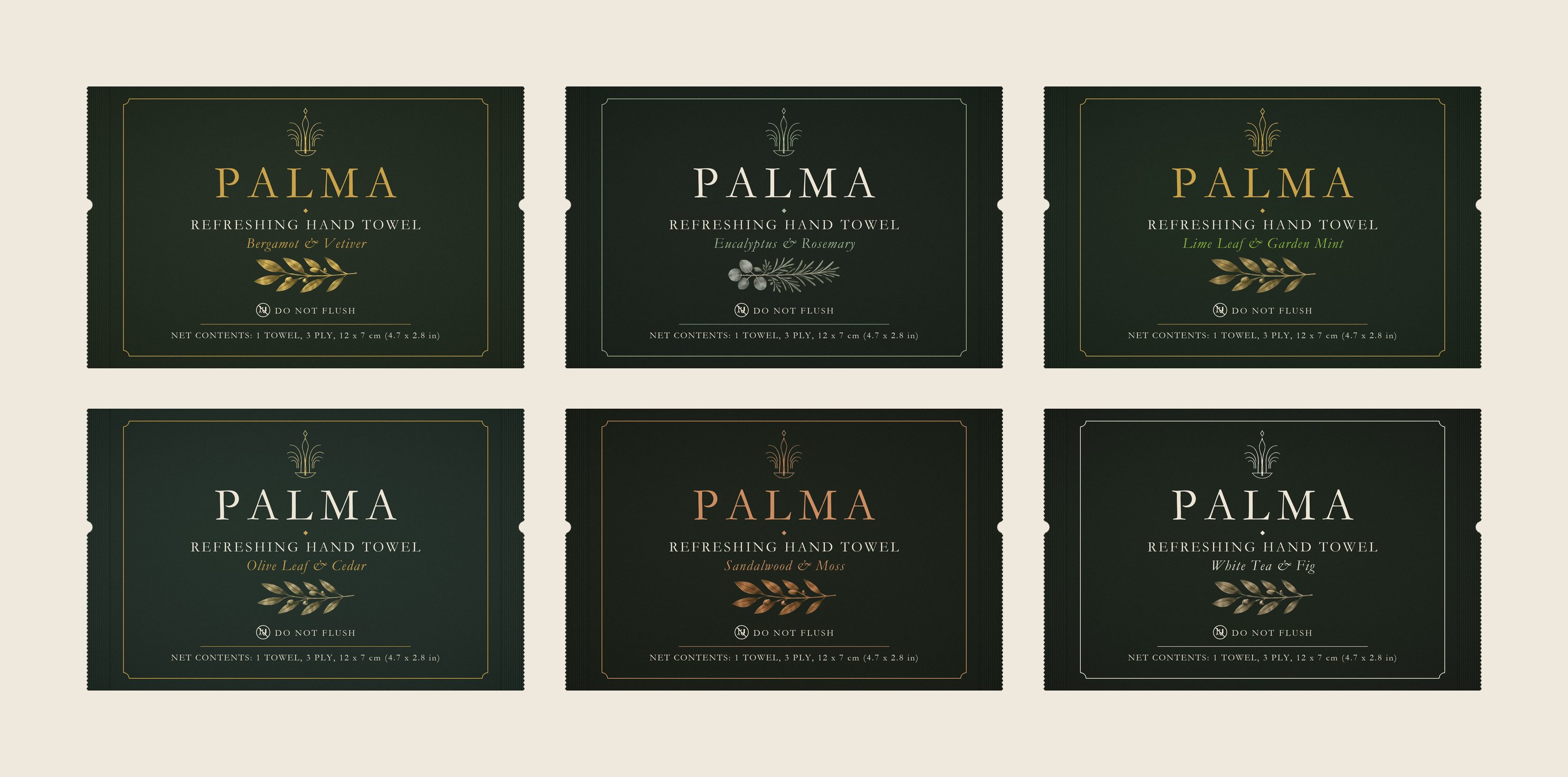
- Full co-branding: fragrance composed for the property, packaging styled as a complete brand system, and presentation language written for the team that delivers it
How to brief an amenity partner
Wherever a property lands on that spectrum, the quality of the outcome is set by the quality of the brief. A good amenity brief reads like a design brief rather than a purchase order. Begin with the room, not the product: describe the space, the service rhythm, and the impression you want the guest to carry out the door. Name the exact moment the amenity will appear, because a towel offered on arrival lives a different life from one offered at turndown or at the close of a meal. Share the collateral the amenity must sit beside, the menus, the stationery, the uniforms, so its typography and tone have something to answer to. Be candid about volume, reorder cadence, seasonality, and who on the team will own the ritual after the launch photographs are taken. Then ask how the partner tests its proposals. Fragrance should be evaluated in the room itself, not in a showroom. Packaging should be proofed on the table and in the hand, beside what you already print. Presentation language should be rehearsed with the people who will actually deliver it on a busy Saturday. Ask, too, what the partner declines to do. A studio that will not argue with you about a loud fragrance or an ornamental packet is a printer, not a partner. This is the structure behind PALMA Private Label, which adapts fragrance direction, packaging treatment, and presentation around each partner's brand through discovery, a written creative brief, concept development, proofing in context, and prototype refinement in live service. The process is deliberately slower than a catalogue order, because the aim is not to place a logo on a packet. The aim is to give the guest one more reason to remember the brand. When the alignment is real, the amenity stops being a line item. It becomes part of the property's voice, and the final impression finally matches the first.